Showing posts with label Library. Show all posts

10.25.2018

World Travelers: Italy

World Travelers: Italy
Grades K-5

My goal with this series is to bridge cultural gaps in children's literacy. I also learn about the countries in the process, and even the parents get involved with asking questions. Sometimes I bring in a special guest or two that has lived or visited that specific country and they tell about their experiences and share items from there. The more this program develops, the better it gets!

CRAFTS

PPTs available upon request.
Each child that attends gets a passport. I created a template to save ink, then filled in the space with the airplane and the quote with stamps. The inside pages are from this template, and each time a child comes to the program, they get a special stamp on the inside. 


MUSIC
I found this snazzy playlist of traditional Italian music on YouTube. It played in the background during the program.

OPENER
I've began showing a PowerPoint presentation at the very beginning. I find this visual to be much more helpful in connecting images and new information. My assistant and I also dress up in traditional clothing to show the types of fashion that were popular through time and classes. After this particular country, I decided it was time to bring the snood back for bad hair days!


SCAVENGER HUNT
Each child received a page of questions and had to find the answers hidden around the library. Here are some random facts I used:
  1. Italy, also known as Repubblica Italiana (Italian Republic) or Italia, also has been nicknamed  'Bel Paese' which means “beautiful country.”
  2. While the official language is Italian, many areas can also speak German, French and Ladin (a dialect mainly spoken in the Dolomite Mountains in Northern Italy), which sounds closer to Romansh of Switzerland than Italian. 
  3. The colors of Italy’s flag represent these virtues: hope (green), faith (white), and charity (red).
  4. The name Italy comes from the word italia, meaning “calf land,” maybe this was because the bull was a symbol of the Southern Italian tribes.
  5. Italy's first societies emerged around 1200 B.C. Around 800 B.C. Greeks settled in the south and Etruscans arose in central Italy.  
  6. Family is very important in Italy and the Italians celebrate loads of holidays. They all get together and eat large meals. The two most important holidays are Christmas and Ferragosto, on 15th August, when everyone heads to the beach
  7. Italy is known for its scientists as it is for its artists. Leonardo da Vinci was the first to prove the world is round and not flat.  Alessandro Volta was the pioneer who did studies in electricity, hence the name 'Volt' describing a unit of electricity.
  8. Rome was the capital of the Roman Empire, which started in 753 B.C, spreading from Europe to northern Africa, and lasted until 476 A.D., for over 1200 years!
  9. Italy has many earthquakes and volcanoes due to the conflict between the Eurasian and the African tectonic plates. The volcanoes Etna and Vesuvius are a constant danger to humans due to their closeness to big cities.
  10. Italy was the birthplace of the Renaissance, which was a period of great cultural achievements in poetry, painting and architecture. Famous artists such as Michelangelo, Raphael, Donatello, and Leonardo Da Vinci were part of the Renaissance.
ACTIVITY STATIONS
Each station has a description of the history and uniqueness of the specific craft they are making. I also provide examples as well.

Gondola
One of the first things people associate with Italy is gondolas! This was an easy craft I was able to print off via Crayola.  


Carnival Mask
In honor of the Carnival of Venice, we made masks from hand tracings. Carnival masks go far back in history for the Italians, and can be fun for all ages.

Materials:
Construction paper in various colors
Dowel rods
Washi tape
Glitter glue and/or stickers to decorate with
Pencil
Scissors (although I would recommend ripping instead, to create that blurry Monet effect)

Tape


Roman Helmet
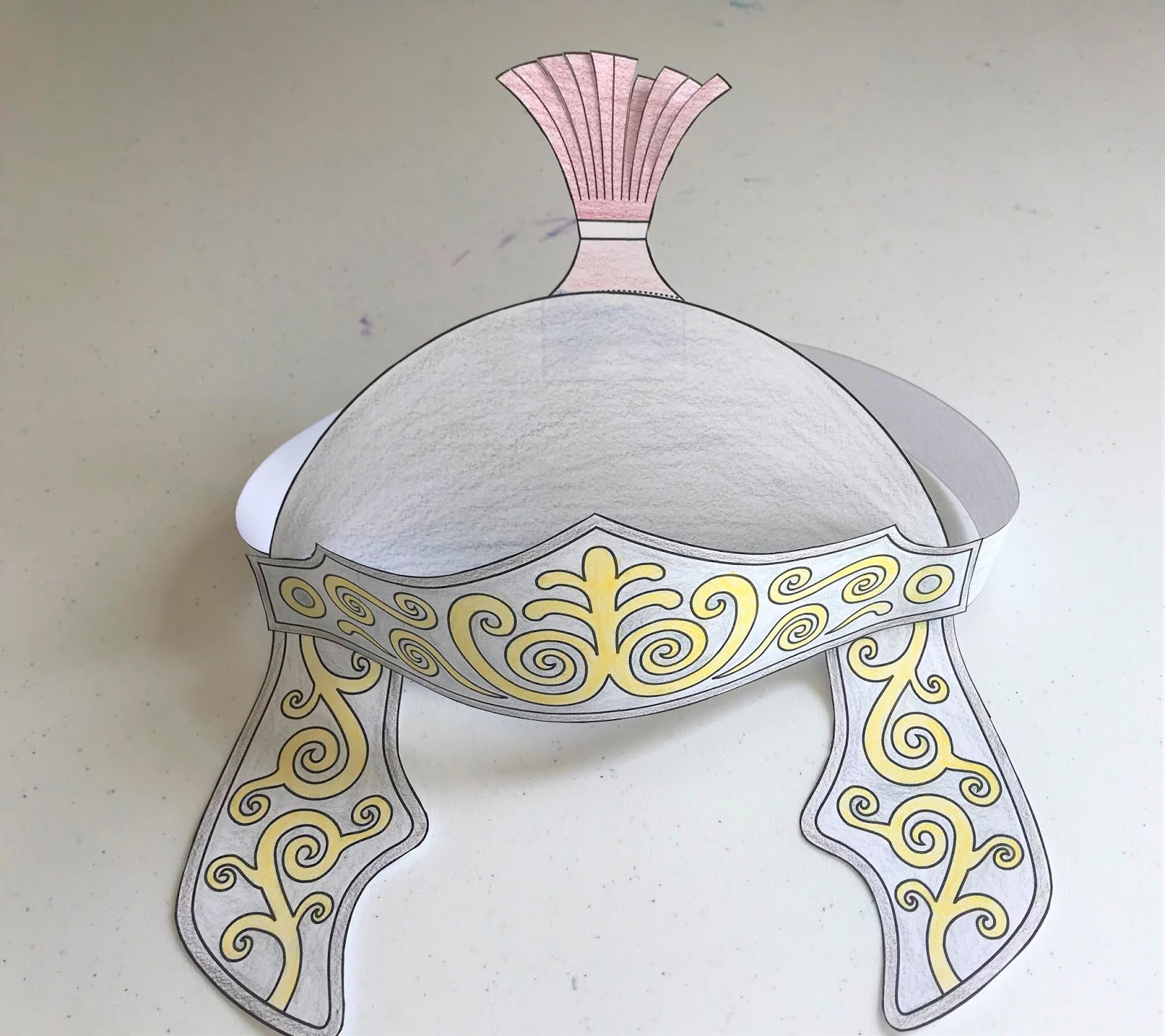
Taking note of the influence the Roman Empire had on garb (especially armor), I decided to include a helmet craft. Kids enjoyed decorating their own helmets and wearing them for historical role play. Find printables here.


Catapult
As a lover of Renaissance Faires, I had to include one of my favorite takeaways from last year's Middle TN Faire...a mini catapult! I honestly could have set this thing in the middle of the room and had nothing else. By the end of the program, everyone just wanted to shoot things at the wall!


RECEPTION: Italy was one of my favorite programs so far, especially since I was able to emphasize the renaissance. I will note, this is also a good time to use the Teenage Mutant Ninja Turtles to talk about renaissance art (I provided this information in the PowerPoint and coloring pages). And if you decide to teach Italy, be sure to have a catapult handy (and plenty of armor)! 

9.28.2015

Storytime: Sing, Sign, and Storytime

SING, SIGN, AND STORYTIME
(American Sign Language)
Ages 0-6

BOOKS
A to Z Sign with Me by Dawn Babb Prochovnic (optional)
Five Little Monkeys Jumping on the Bed by Eileen Christelow
Five Little Ducks by Anthony Lewis
Goodnight Moon by Margaret Wise Brown

OPENER
Previously, I had taught my kids "The More We Get Together" with signs. They picked up quickly and really enjoyed singing and signing along! The first book, A to Z Sign with Me, I only used with my older kids because I knew some of them already knew the alphabet. I usually have them sign their name to me when they come in to see if they remember. 

BOOK A to Z Sign with Me by Dawn Babb Prochovnic (optional, I save this for older kids)

BOOK Five Little Monkeys Jumping on the Bed by Eileen Christelow
For this book, I taught them the signs for "monkey" and "mother." Of course, they already knew how to sign "five," so they signed that with me, too.

STRETCH

Up to the Ceiling
Up to the ceiling, (stretch both arms overhead)
Down so you’re small. (bend at waist and touch floor)
Right to the bookshelf (stretch arm to right)
Left to the wall. (stretch arm to left)
Right hand, left hand,
Turn them around. (spin hands around each other, 'wheels on the bus style')
Fold them together
And now sit down

BOOK Five Little Ducks by Anthony Lewis (this is also a song, so we sang along as we signed)
The signs we used with this song were "duck," "swim," "over," and again we signed "mother" and "five." I had really good feedback from this book/song. When I researched it, I found that it's like a nursery rhyme from Europe. Pretty cool!

BOOK Goodnight Moon by Margaret Wise Brown

As our final book, I signed the whole story so they could see a more fluent interpretation of signing a book. I taught them a couple easy words during, but they were watching the signs and you could tell they were interested.

SONG

Twinkle Twinkle Little Star (with Sign Language)

ACTIVITY STATIONS

Sign Your Name!
I found a sign language font and printed out each letter so the kids could learn how to say their names in sign. I provided crayons, glue, and scissors in case they wanted to cut around the hands.

Flash Cards
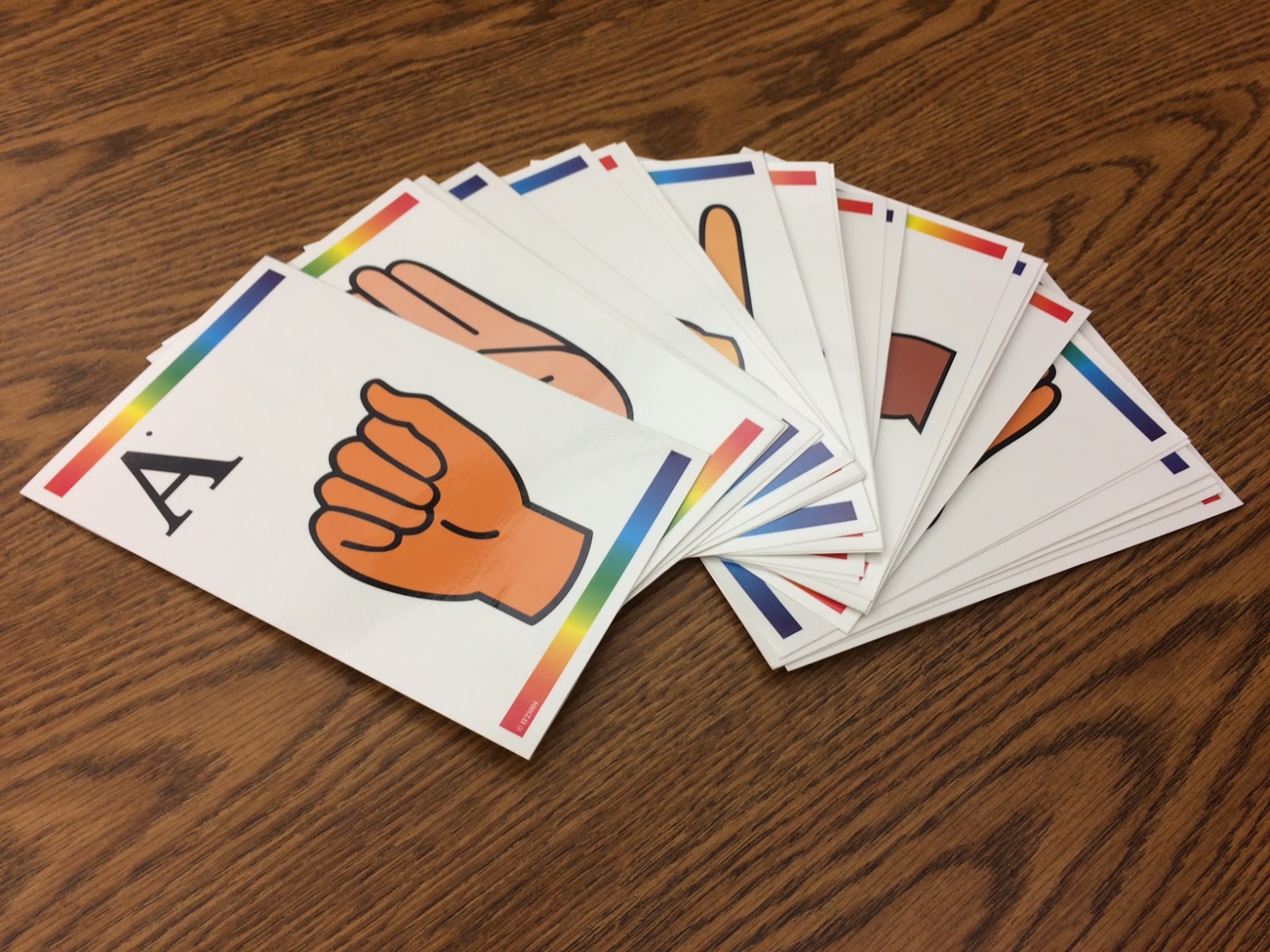
I was lucky enough to find these in the deep dark depths of dusty nowhere (the back of the filing cabinet)! This was a great visual for the little ones since it's simple and just colorful enough.

ASL/Braille Blocks
These blocks circulate between branches, and I'm so glad we have them! I left them out most of the day and kids really enjoyed playing with them. They not only introduce them to sign, but also braille. This is a great language toy!

Printables via SignLanguagePrintables.com
I provided a copy of this sheet for each person that attended. The only thing I don't like about it, is that the numbers stop at 9 and not 10. Other than that, this is a great resource for the alphabet and numbers.

RECEPTION: This was such a fun storytime! Both parents and children seemed to have a lot of fun, and the signing helped to keep their attention. The songs were a hit. I had introduced "Twinkle, Twinkle" the week before with my ukulele, so they've been learning different variations of it. We had people from other branches join us for this specific storytime as well. A lot of the parents asked me to repeat certain signs from Goodnight Moon so they could use them with their child at home. I feel this storytime was a definite success.
Follow My Sign Language Pinterest Board.

9.13.2015

World Travelers: France

World Travelers: France
Grades K-5

My goal with this series is to bridge cultural gaps in children's literacy. The best part about it is that I learn a lot about the countries in the process, and even the parents get involved with asking questions. Sometimes I bring in a special guest or two that has lived or visited that specific country and they tell about their experiences and share items from there. The more this program develops, the better it gets!

Each child that attends gets a passport. I created a template to save ink, then filled in the space with the airplane and the quote with stamps. The inside pages are from this template, and each time a child comes to the program, they get a special stamp on the inside. If they "travel" to so many of the locations, they get a prize!

MUSIC
I found this snazzy playlist of French music on YouTube. It played in the background during the program.

OPENER
Foreign exchange student, Anne Sophia, was kind enough to come in and talk about life in France. She provided a power point that everyone really enjoyed. The kids were especially interested in talking about the food! Since the last program, the kids have started opening up more and becoming involved in the presentation.
 

FACT SEARCH
Each child received a page of questions and had to find the answers hidden around the room. Here are some random facts I used:
1. The name France comes from the Latin word Francia, which means 'country of the Franks.'

2. French is the second most studied language in the world after English.

3. The capital city is Paris. Other major cities include Marseilles, Lyon, Lille, and Nice-Cannes.

4. France is the most visited country in the world, with over 80 million visitors every year.

5. The Louvre is the most visited art museum in the world. The famous Mona Lisa painting is on display in this museum.

6. During World War II, allied forces landed on the beaches of Normandy in northern France. The first day of these landings is called D-Day.

7. The famous Eiffel Tower in Paris was built as the entrance point for the 1889 World Fair. It is one of the most visited monuments in the world.

8. France was the second country to host the modern Olympic Games in 1900 in Paris. Paris also hosted the games again in 1924. Three winter Olympics have been hosted in France.

9. The most famous road bicycle race in the world, the Tour de France, zig zags through the French landscape.

10. Louis Pasteur was a French scientist who made many discoveries in the fields of chemistry and microbiology.

ACTIVITY STATIONS
Each station has a description of the history and uniqueness of the specific craft they are making. I also provide examples as well.

Cave Paintings
The Chauvet Cave and Lascaux are France's hubs for some of the oldest cave paintings in the world, between 20,000-36,000 years old! I had to incorporate the awesomeness of cave painting, so I got a cardboard box, wrinkled brown paper, and some crayons. My first version of the structure lasted about 5 minutes. So I reconstructed it and this is what I ended up with (along with some cave drawings I started them out with): 

Monet's Water Lilies
This was a great way to introduce impressionist painting. It allowed the kids the opportunity for open creativity and they really enjoyed learning about Monet and his method of painting. I also covered Degas a little bit while I explained the project.

Materials:
Different shades of blue construction paper
Tissue paper
Scissors (although I would recommend ripping instead, to create that blurry Monet effect)
Glue
 

French Knitting
This was incredibly popular! I got the idea from BuzzMills. A lot of the parents asked me to print off the instructions so they could do it at home, too. Kids were wearing their creations throughout the library, it was great!

Materials:
Toilet paper roll
4 Popsicle sticks
Some nifty tape
Scissors
Yarn
   

Escargot
The French version of hop scotch! I just drew the game onto bulletin board paper so it was big enough to tape onto the ground.

How to play:
1. Decide which foot you will be hopping with. If you decide on your left foot, you must hop in and out each time on that foot.
2. Hop through the snail pattern
    a. Hop only once in each space. No player may touch a line when hopping.
3. In the center “home” space you may rest on both feet.
4. After resting, turn and hop back to the beginning. Repeat the pattern 1x.
5. After you have hopped in and out twice, choose one space for your “house”. Write your initials in this space. This becomes another rest space for you. No other player may hop into your house.


The game ends when it is impossible for anyone to hop into the center space or when all of the squares have initials in them. The player who “owns” the greatest number of squares wins.

Bilboquet
Pretty simple. Just get the pom pom in the cup. This is a versatile game that has different versions of itself all around the world.

Materials:
Cups
String
Pompoms
Whatever you wish to decorate the cups with
Something to puncture a hole in bottom of cups (since I had styrofoam, I just used a paperclip)

RECEPTION: Again, a very successful program! This was probably the biggest group I've had for this series thus far. I had lots of returning kids with their passports, and they became more involved with the speaker, too. The activities at this one were also a hit. 

After the presentation, Anne Sophia said she was really grateful to come and share about her country. The night before, I was thinking about what a great opportunity this could be for people who are far away from home. This has become a chance to not only bridge cultural gaps for children and their parents, but also for foreigners to share about their homelands while they're over here.  I could tell it meant a lot to her, and that expanded my entire perspective on this program. 

Check out my list of books related to France HERE.


Follow My France Board on Pinterest.

8.15.2015

World Travelers: Japan

World Travelers: Japan
Grades K-5

My goal with this series is to bridge cultural gaps in children's literacy. The best part about it is that I learn a lot about the countries in the process, and even the parents get involved with asking questions. Sometimes I bring in a special guest or two that has lived or visited that specific country and they tell about their experiences and share items from there. The more this program develops, the better it gets!

Each child that attends gets a passport. I created a template to save ink, then filled in the space with the airplane and the quote with stamps. The inside pages are from this template, and each time a child comes to the program, they get a special stamp on the inside. If they "travel" to so many of the locations, they get a prize!

MUSIC
I checked out this CD from the library from the soloists of the Ensemble Nipponia. It includes traditional vocal and instrumental music featuring traditional Japanese instruments such as the shakuhachi, biwa, koto, and shamisen (a few of these we demonstrated during the presentation). You can find a copy and more info on this CD on Amazon.

OPENER
Through the Ozarks Chapter of the Missouri Writer's Guild I met a new friend, Majetta. Majetta, her husband, and her daughter spent several years living in Japan and agreed to come in and present. What an amazing time we had! The presentation was only supposed to last 15-20 minutes, but people were so interested it turned into 45 minutes! I couldn't have asked for more. 
They brought authentic paraphernalia to share with kids and families, some of which included Kokeshi dolls, a Shamisen (stringed instrument), Taiko drums, a Japanese drivers license, and rice paper eggs that each attendee took home with them as a souvenir. I had also provided free chopsticks for everyone. It was an enjoyable and educational experience for both children and adults!
 

FACT SEARCH
Each child received a page of questions and had to find the answers hidden around the room. I've asked what they remember from last time, and they relayed some facts back to me! I was impressed. Here are some random facts I used:
1. The Japanese name for Japan is "Nihon" or "Nippon" which means "sun origin".

2. Japan belongs to the continent of Asia. Japan is an island nation surrounded by the Sea of Japan to the East and the Pacific Ocean to the West.

3. Japan is made up of 6,852 islands.

4. The highest point in Japan is Mount Fuji, which stands at 3,776 meters (12,388 feet).

5. As of July 2012, there are over 127 million people living in Japan, which is the tenth largest population in the world.

6. Tokyo is the capital city of Japan and also the largest city. Other major cities include Osaka, Nagoya, and Sapporo.

7. Japanese if the official language of Japan.

8. Japan sits along the "Pacific Ring of Fire," so it has many volcanoes and experiences many earthquakes. In 2011, an earthquake of magnitude 9.0 hit Japan and created a tsunami which resulted in much devastation.

9. Almost three quarters of Japan's land is either forest or mountains and is difficult to be made into farms, industrial, or residential areas.

10. Ancient warriors of Japan were known as Samurai. They were very skilled fighters and swordsmen. Their main weapon was the Katana, a sharp sword with a slight curve to it.

11. Due to gases produced by power plants, Japan sometimes suffers from acid rain.

12. Japan is an industrialized nation, producting some of the most technologically advanced motor vehicles, electronics, and machine tools.

13. Some of the most well-known companies in the world are Japanese, such as Toyota, Honda, Sony, Nintendo, Canon, Panasonic, Toshiba, and Sharp.

14. Japanese cuisine has become popular around the world. Some well-known dishes are sushi, sashimi, and tempura.

15. Sumo is recognized as the national sport of Japan, although the most popular spectator sport is baseball.

ACTIVITY STATIONS
Each station has a description of the history and uniqueness of the specific craft they are making. I also provide examples as well.

Koinobori (Flying Carp) Kite
In Japanese culture, the carp symbolizes courage and strength because of its ability to swim up a waterfall. Originally, the banners were used by samurai warriors on the battlefield. Now, they are used for Children's Day and family order, being flown above houses from biggest "fish" to the smallest. 

Materials: 
Printable carp found at Activity Village 
Streamers
String
(Flat) wooden skewers to create a handle or "pole"
Adhesive

Kids were flying kites around the Children's department all day!

The Great Wave Off Kanagawa by Katsushika Hokusai
I chose to integrate the infamous Great Wave Off Kanagawa in this simple art project. I also offered questions for them to consider: What is the first thing you notice? This is the focal point. What shapes do you see? What colors? Is there movement in the piece? How does it make you feel? Have you been to the ocean? What was it like? What time of day and season do you think is it? Does this painting look realistic or imagined? Try smearing the chalk with your fingers, what kind of effect do you see?

Materials:
Brown and blue construction paper
White, purple, and blue chalk
Scissors
Glue

Just draw your waves, color the sky, then cut and paste your waves to the brown paper.

Mt. Fuji Diorama
I printed this out at Canon Creative Park, but when I went back to find it, it wasn't there. So hopefully it isn't gone forever...but there are still plenty of really cool, educational crafts on there!

Japan Inspired Sensory Bin
Rice, origami, chopsticks...anything I wanted to fit into the program somehow could go in here. I had a lot of kids play with this for a long time. I actually got some complaints when it was time to put it away!

Otedama Games
Another great find from Activity Village! If you want to make traditional bean bags for these games, head on over there to find out how, but I just used some bean bags we already had in the office. To find different games you can play, go here.

RECEPTION: Wow! This was probably the best program in this series so far. The excitement and interest between both parents and children was thriving and I received a lot of great feedback. The program is originally set for 1 hour, but I had people stay for 2! I felt that it was very successful and I'm really happy with how everything turned out.

Check out my list of books related to Japan HERE.


Follow My Japan Board on Pinterest.

7.18.2015

World Travelers: Kenya

World Travelers: Kenya
Grades K-5

My goal with this series is to bridge cultural gaps in children's literacy. The best part about it is that I learn a lot about the countries in the process, and even the parents get involved with asking questions. Sometimes I bring in a special guest or two that has lived or visited that specific country and they tell about their experiences and share items from there. The more this program develops, the better it gets!

Each child that attends gets a passport. I created a template to save ink, then filled in the space with the airplane and the quote with stamps. The inside pages are from this template, and each time a child comes to the program, they get a special stamp on the inside. If they "travel" to so many of the locations, they get a prize!

MUSIC
This time I didn't include a playlist from YouTube, but instead checked out Putumayo Kids' African Playground. It was perfect and I didn't have to deal with random ads.

OPENER
This time, I had mounted a map onto a big piece of cardboard that I had cut out to show the month's country in relation to us. I always include the country's flag and a close up of the country as well.
I was lucky enough to have my friend Ruthie and her new husband, Devin, come in as my guest speakers. Both have spent time in Africa and Ruthie spent several years specifically in Kenya. They shared stories of what it was like to live there, cultural differences, random interesting facts, and passed around some novelty items as well. They were great presenters, and everyone became involved in asking questions!

FACT SEARCH
Each child received a page of questions and had to find the answers hidden around the room. Today, it we called it a safari! Here are some random facts I used:
1. Kenya is located in East Africa, on the Equator.

2. In 2012, the population of Kenya was estimated to be around 43 million.

3. Hydroelectricity is the largest contributor to Kenya's electrical supply.

4. The capital and largest city is Nairobi, Mombasa is the second largest city.

5. The two official languages in Kenya are English and Swahili, although there are dozens of other languages spoken in other parts of the country.

6. Kenya is a developing country and half of the population live in poverty.

7. Kenya features many national parks and wildlife reserves, with safaris being a popular activity for visitors.

8. Agriculture is important to Kenya's economy. Especially tea, coffee, and flowers.

9. Large animals such as lions, buffalo, leopards, elephants, and rhinoceroses are present in Kenya.

10. In Kenya, they drive on the left side of the road.

11. Kenya is named after Mt. Kenya, the tallest mountain in the country (5,199 meters, 17,057 feet).

12. In terms of sports, Kenya is perhaps best known for its middle and long distance running, with the country frequently producing Olympic champions.

ACTIVITY STATIONS
Each station has a description of the history and uniqueness of the specific craft they are making. I also provide examples as well.

Learn Swahili! Flash Cards
This was a fun passive activity. I just found a website with some English-Swahili terms and made my own. I laminated them to make them last. By the way, "hakuna matata" really DOES mean "no worries!"

African Masks
One of the main characteristics of culture of African peoples is use of masks in rituals and ceremonies. It is believed that the earliest masks were used in Africa before Paleolithic era. They represent spirits of animals or ancestors, mythological heroes, moral values or a form of honoring of a person in a symbolic way. This became an open-ended art project and all I did was lay out a bunch of random craft pieces and printed off this mask from Nuttin' But Preschool.

Traditional African Music
Traditional African music is polyrhythmic; 2 or more rhythms are present. The rhythm of the drum is predominating while string, wind and shake instruments accompany. People become a third instruments by clapping, stomping, singing and chanting. The kids really enjoyed experimenting with sound and rhythm!

Games
Soccer, or football, is huge in Kenya! I took the lid to a board game, some green construction paper and a white crayon and made this table-top football field. Then I provided cut up straws and a pom-pom for the kids to try and blow the pom-pom to the other side. I made sure to provide a trash can underneath the table to dispose of the used straws.

Shisima is a math game that both the parents and kids enjoyed. One family stayed and played it for an hour! I got the idea from B-Inspired Mama (you can also find the rules of the game there).
  

Felt Board Safari
For the younger kids I pulled out this nifty African animals felt set we had in the office. It provided a more sensory experience, but the older kids ended up playing with it as well!

RECEPTION: This was another successful World Travelers! Everyone really enjoyed the presentation and hearing about life in Kenya. There was a good turn out and we had some kids who returned with their passports. One of them has been writing the dates underneath the stamps. It's so cool to see how this program is becoming real to them! Next stop...Japan!

Check out my list of books related to Kenya/Africa HERE.


Follow My Kenya Board on Pinterest.